Shipping available
Shipping available
We ship to Portugal and Europe


If the customer wants the second fiberglass layer (patch) to run along the entire length of the board, instead of covering only 3/4 and stopping before the nose—thereby avoiding the darker ‘V-shaped’ color variation on the deck—the final result would look like the blue two-tone board shown below.


The final finish a surfboard can have is sanded or polished.
Sanded– The board has a flatter, non-reflective finish.
Polished – The board gets a highly reflective finish. The main difference with this finish is that it makes the board’s colors pop.
It is possible to polish the entire board, or only part of it.
On the board below, the yellowish-green bottom is polished, and on the deck, the polishing stops two fingers’ width from the rail, leaving the black interior with a matte finish.
Opaque: By adding more black paint, the finish becomes opaque, covering the board’s stringer (wood).
Translucent: By adding less yellow paint, the bottom becomes translucent, keeping the stringer visible.
Note: When using one color for the bottom of the board and another for the deck, if both are translucent, they will overlap and blend where they wrap around the rail. If the client wants to avoid this, it is necessary to choose one opaque color and one translucent color, as shown in the photo below. Another option is to use white on one of the sides, or leave it clear.


In the example below, we mixed two pigment colors in the same resin bucket and applied them to the bottom of the board — in this case, a dark blue and a light blue — creating this water reflection or smoke effect.
On this board, a blue pinline (spray) was added where the pigment meets the deck (which has no pigment). Additionally, only the pigmented section received a polished finish.
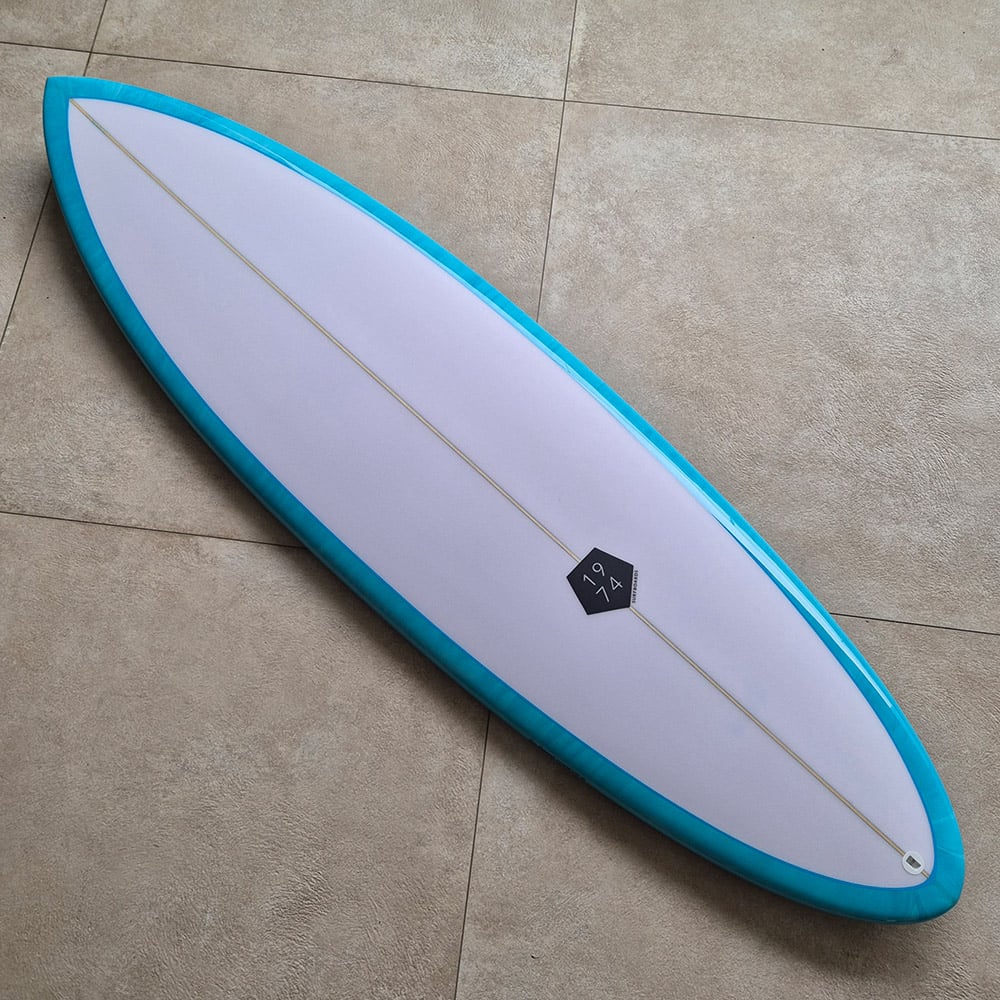

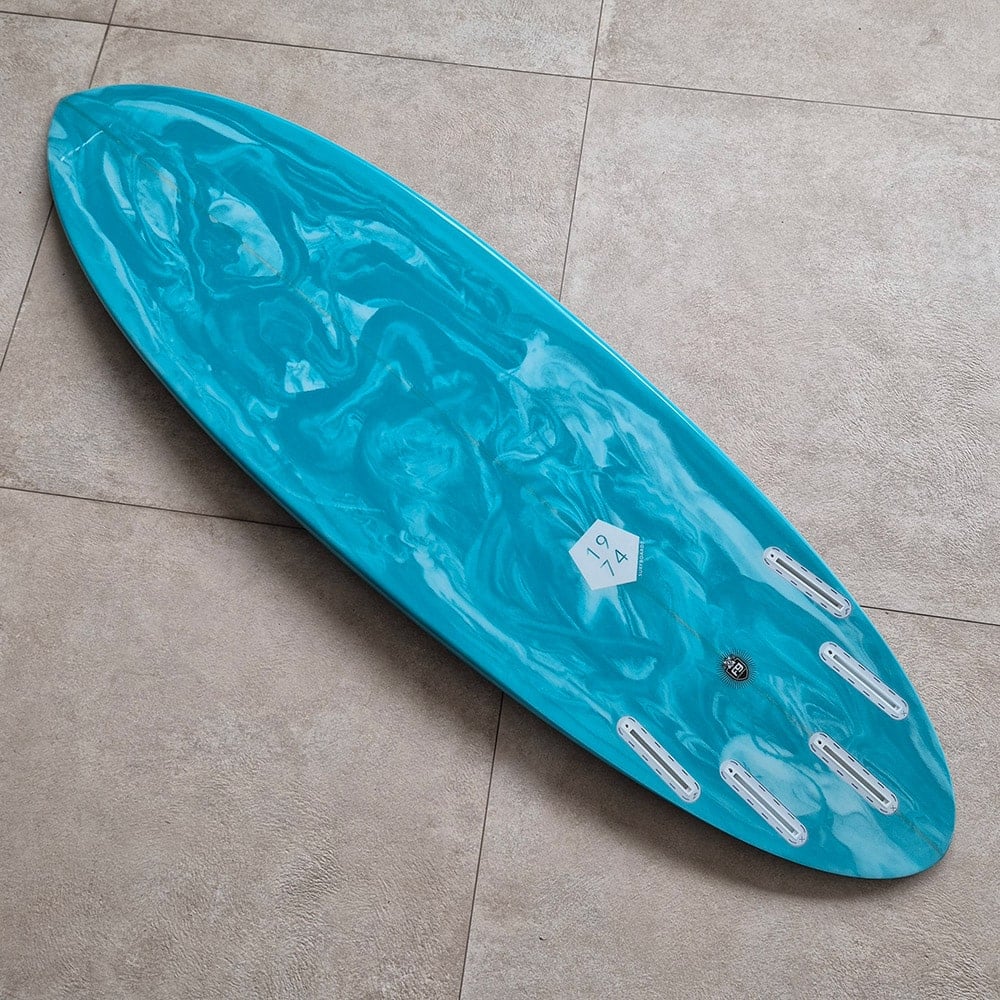

This painting technique involves applying spray paint directly onto the board blank or over the fiberglass. The final result is a more opaque color, without the translucent tonal effects that the pigmented resin technique provides.
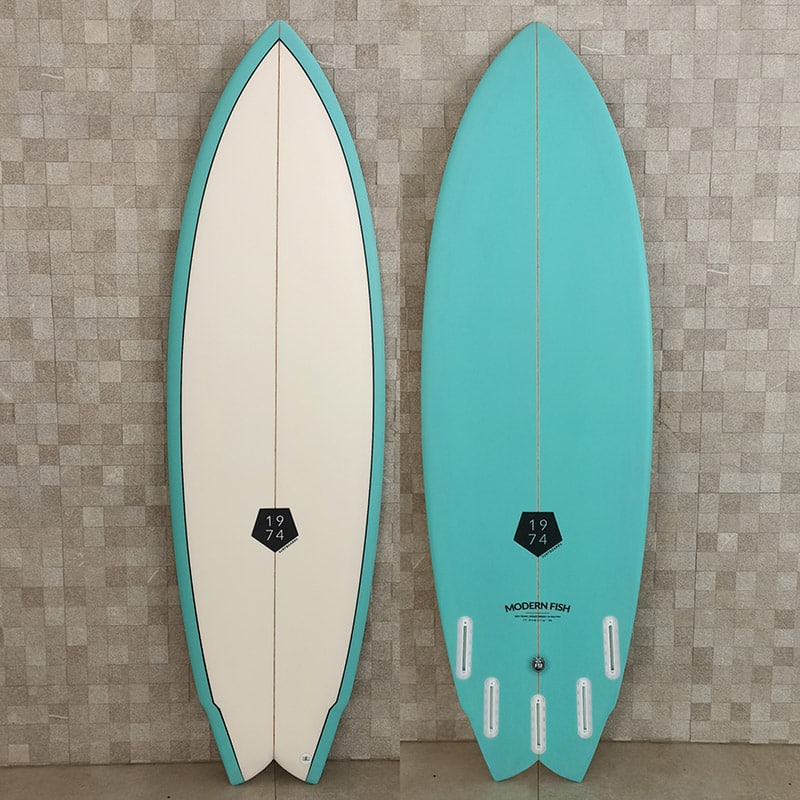

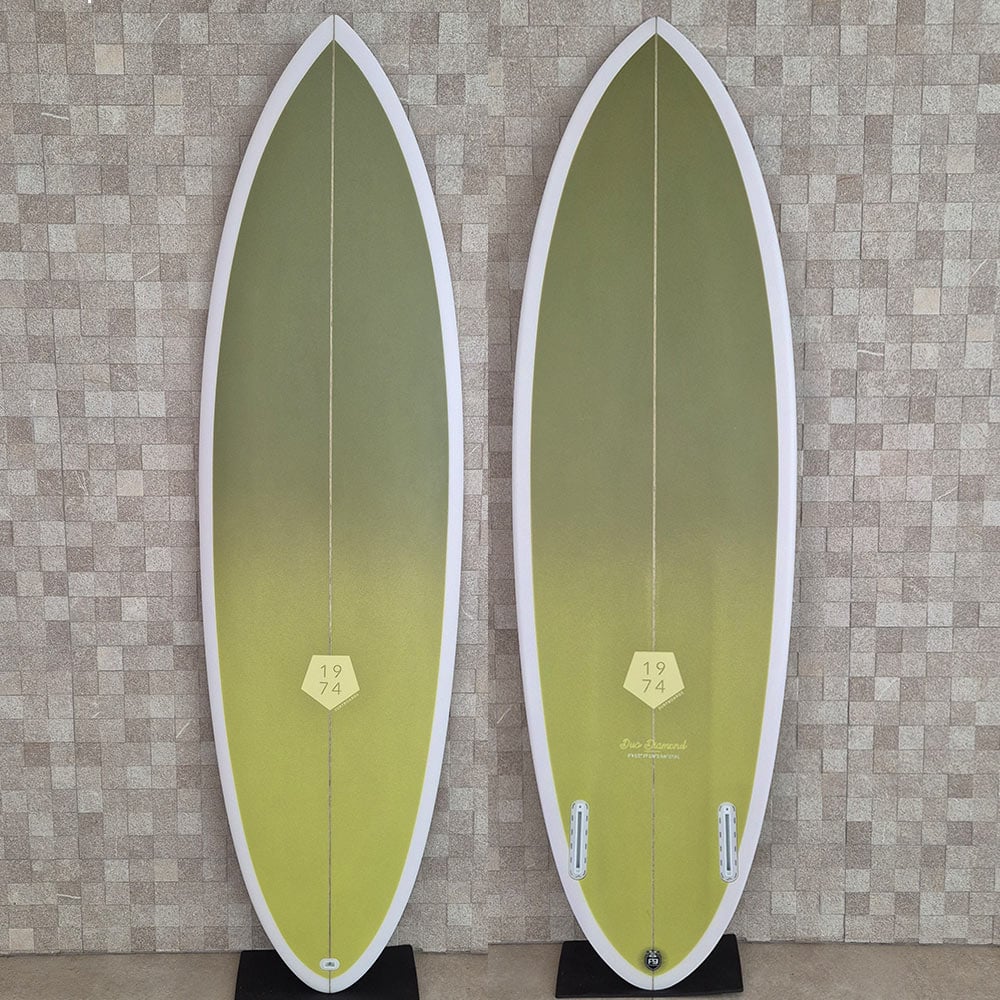

Click here to see the color options we can try to reproduce. It’s important to note that, since this is a handcrafted process and each color is mixed by hand according to the customer’s choice, slight variations in color may occur.
Fale com o shaper