Shipping available
Shipping available
We ship to Portugal and Europe

There’s still some confusion around the names and types of materials used in surfboards today, so in this introduction, we’ll clarify the common combinations of foam blanks and resin used in modern surfboards.
Surfboards with PU (polyurethane) blanks are laminated using polyester resin.
Surfboards with EPS (expanded polystyrene) blanks are laminated using epoxy resin.
Polyurethane surfboards are the most popular and widely used today, including among elite surfers on the CT (Championship Tour). Their construction is generally a bit heavier and less durable than epoxy boards, but they tend to feel more consistent and predictable underfoot. This is due to their slower flex pattern and denser foam compared to epoxy constructions, which results in fewer “surprises” and more control during surfing—especially during harder turns or quicker maneuvers.
Polyurethane also absorbs less water when dinged and is less prone to heat damage than epoxy.
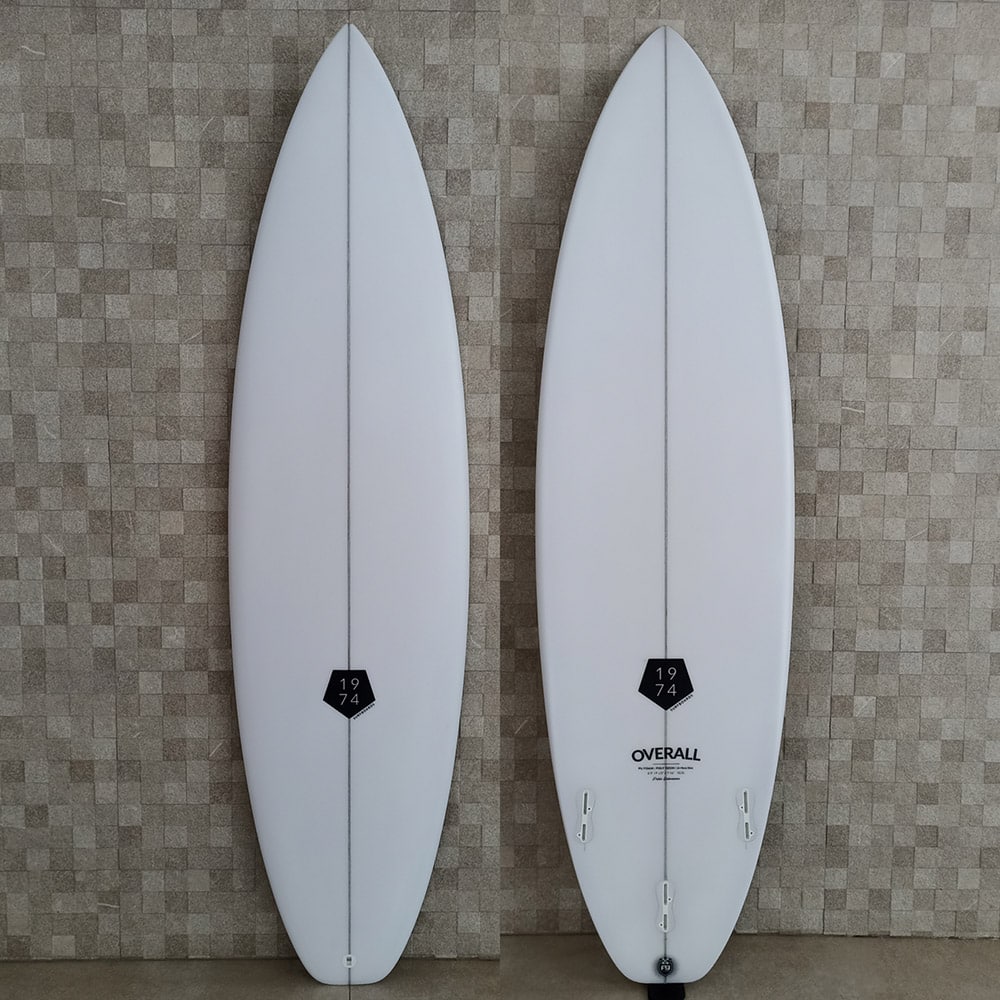
The term “epoxy board” refers to the use of epoxy resin in the lamination process. These boards are built using EPS (Expanded Polystyrene) foam blanks, which are only compatible with epoxy resin. Compared to PU/polyester constructions, EPS/epoxy boards are generally lighter and stronger.
They also tend to feel more lively and flexible underfoot due to their faster flex pattern and lower foam density. This added liveliness, while beneficial in certain conditions, can feel less predictable or consistent than PU, especially in high-performance situations that demand precision and control.
In fast, powerful waves, the lightweight nature of EPS boards may cause the rider to feel surface imperfections (or “bumps”) on the wave more directly through the board — particularly in the legs — since the board doesn’t cut through chop as well as a heavier PU board.
On the other hand, that same lightweight construction offers excellent speed, agility, and responsiveness in weaker or slower waves, where liveliness becomes an advantage.
EPS foam also tends to be more resistant to pressure dents under the surfer’s feet when compared to PU, especially in higher-density blanks. However, EPS is more sensitive to heat, particularly if left inside a hot car during the summer or exposed to direct sunlight for long periods.
For an all-around construction with a good weight-to-strength ratio, we prefer to work with 2.0 lb/ft³ EPS density.
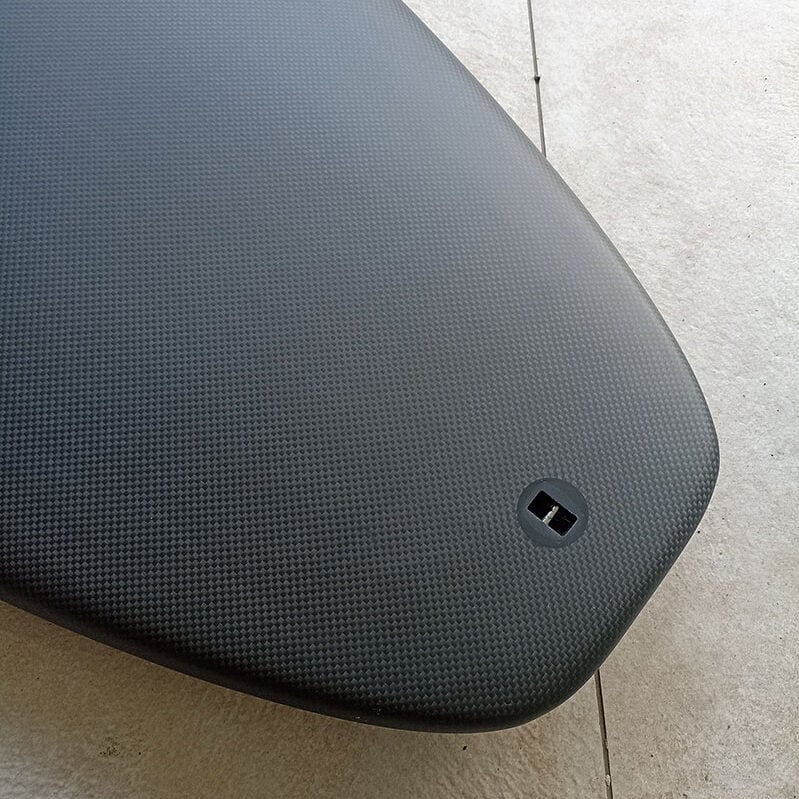
We build surfboards entirely with carbon fiber and XPS foam, using advanced lamination techniques to maximize performance and durability. Our process employs a vacuum bag system to apply maximum, evenly distributed pressure during lamination, ensuring a superior and consistent bond between materials for a stronger, lighter construction.
This type of construction is significantly stronger than traditional fiberglass boards, thanks to the superior properties of carbon fiber. Unlike conventional fiberglass cloth, carbon fiber responds more quickly and offers elastic rebound.
The result is noticeable energy release during bottom turns and powerful maneuvers—areas where the board typically flexes and stores energy—translating into added speed and drive.
For lighter boards, we recommend using XPS foam with a density around 2.0 lb/ft³. For increased durability and resistance to pressure dents, especially under the surfer’s feet, a higher-density foam such as 2.3 lb/ft³ is ideal.



Fale com o shaper